
Tree surgeons · Hampton & Twickenham
Tree Pollarding in Hampton, Twickenham & the TW Area
Expert pollarding and re-pollarding of limes, planes, willows and other suitable trees, keeping them compact and healthy for years.
- Fully insured
- Free, no-obligation quotes
- Open 24/7
- All waste removed
Pollarding by Arbor & Stone
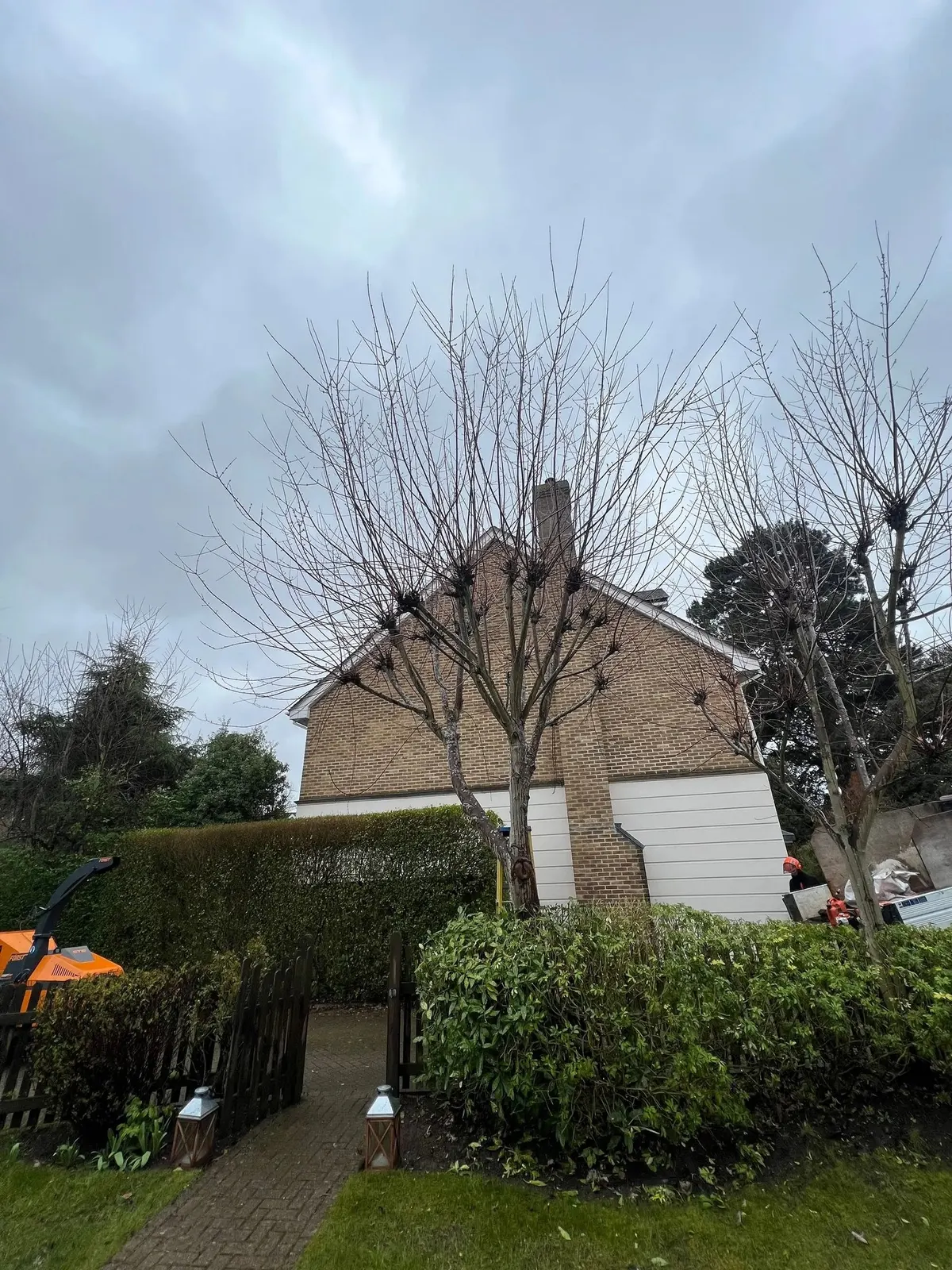
Pollarding is a traditional pruning technique that cuts a tree’s branches back to a permanent framework of “knuckles” or pollard heads. The tree then regrows a crown of new shoots, which are cut back again on a regular cycle. It keeps trees compact in small gardens and on streets – you will see many pollarded limes and London planes across Twickenham and Richmond.
Is pollarding right for your tree?
Pollarding suits species that respond vigorously to hard pruning, such as lime, London plane, willow, sycamore, mulberry, catalpa and Indian bean trees. It is best started when a tree is young and then kept up for the rest of its life.
Starting to pollard a large, mature tree that has never been pollarded is risky – the big cuts can let in decay – so in that situation we will usually recommend a crown reduction instead.
Maintaining existing pollards
Once a tree has been pollarded it needs to be re-pollarded regularly, usually every one to three years depending on the species and how fast it grows. Leaving it too long allows heavy branches to develop on weak attachment points, which can then split out. We cut back to the existing pollard heads without damaging them, so the tree keeps its shape.
When to pollard
Pollarding is best done in late autumn and winter while the tree is dormant. We collect and chip all the arisings and leave the garden or street tidy.
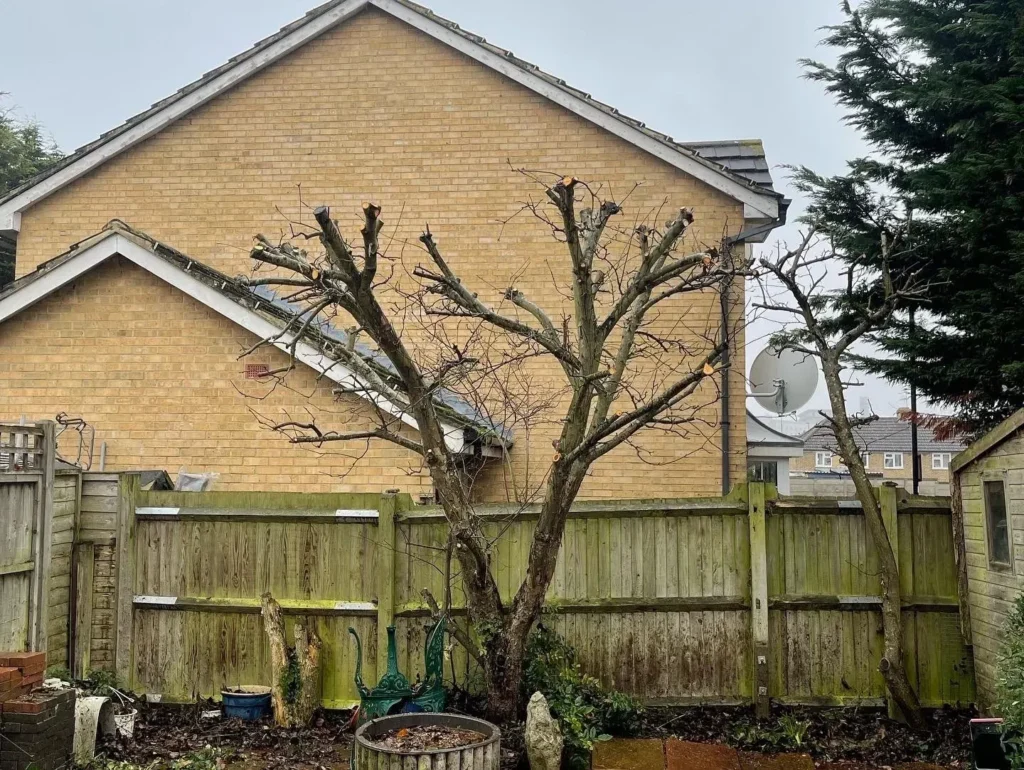
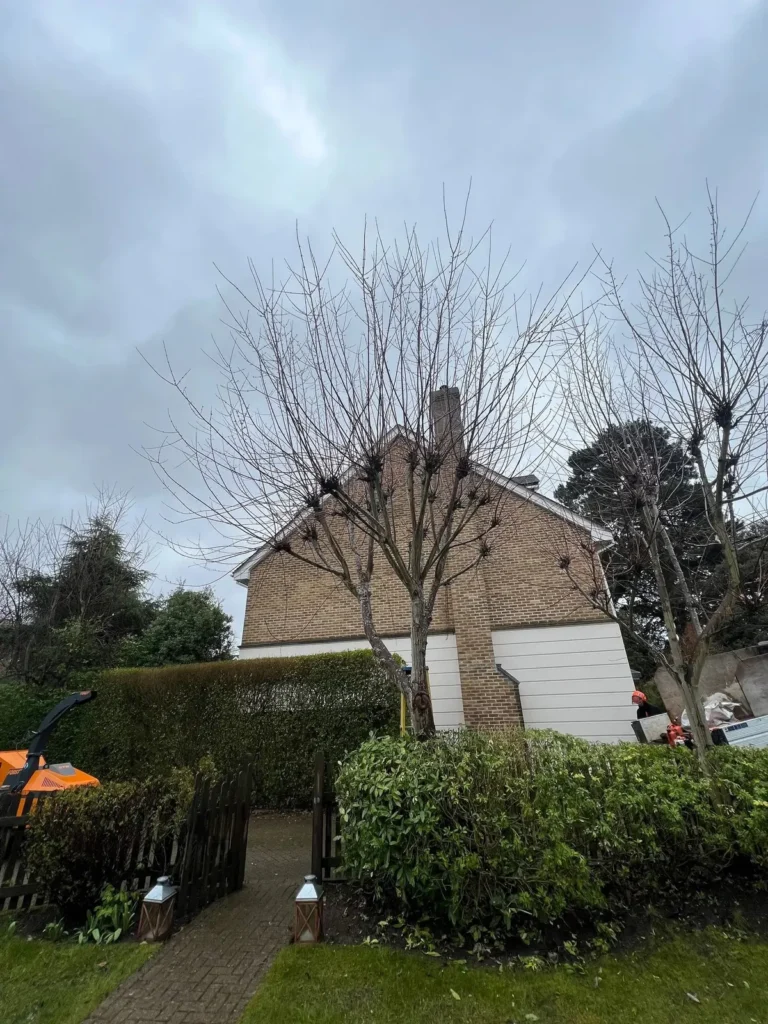
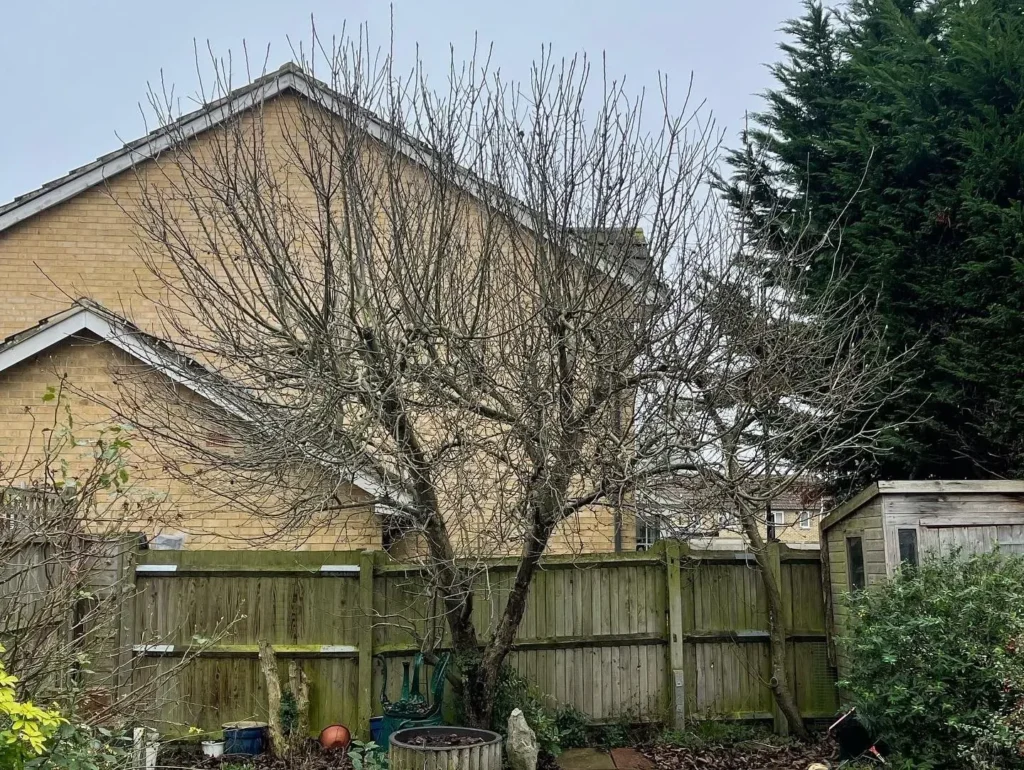
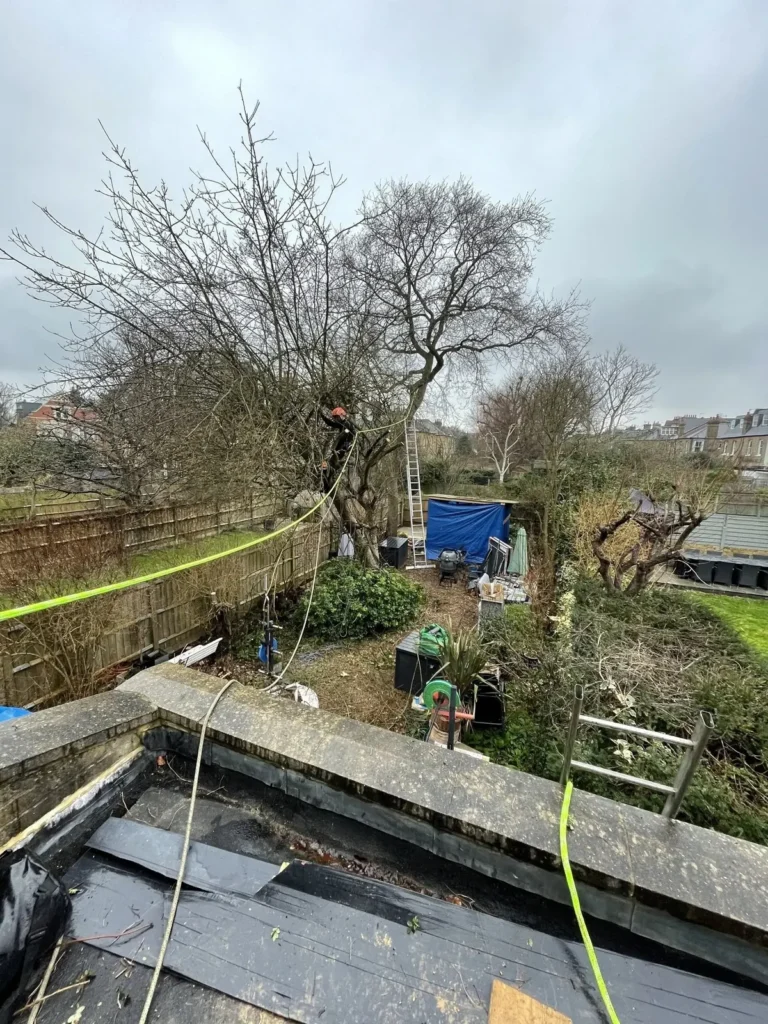
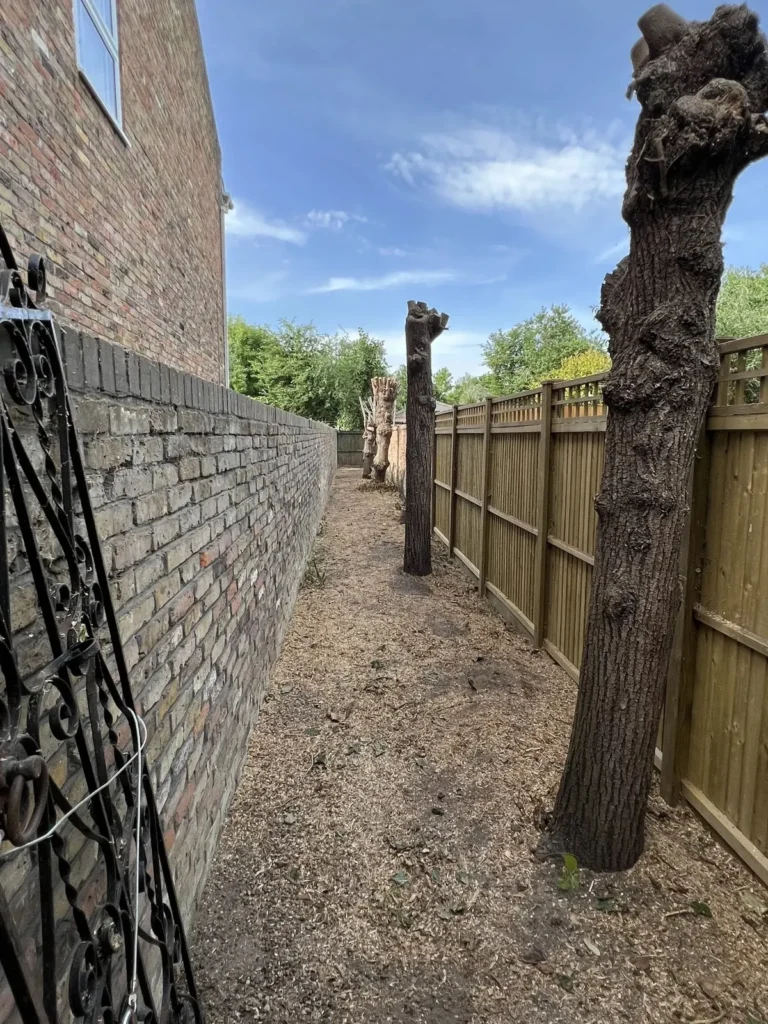
Recent pollarding work
Pollarding – frequently asked questions
How often does a pollarded tree need cutting?
Usually every one to three years, depending on the species and growth rate. Regular re-pollarding keeps the tree healthy and safe.
Will pollarding kill my tree?
No – suitable species regrow strongly after pollarding. Problems happen when a mature tree is pollarded for the first time, or when an established pollard is neglected for many years.
Which trees can be pollarded?
Lime, London plane, willow, sycamore, mulberry, catalpa and several other species respond well. Most conifers, birch and beech do not.
Can you pollard an old tree that has never been pollarded?
Generally we do not recommend it. A crown reduction is usually a safer way to reduce the size of a mature tree.
Pollarding near you
We provide pollarding across Hampton, Twickenham & the TW postcodes and everywhere within about 15 miles of our Ashford base, including:
- Tree surgeon Hampton
- Tree surgeon Hampton Hill
- Tree surgeon Hampton Wick
- Tree surgeon Twickenham
- Tree surgeon Whitton
- Tree surgeon Teddington
- Tree surgeon Richmond
- Tree surgeon Isleworth
- Tree surgeon Hounslow
- Tree surgeon Feltham
- Tree surgeon Sunbury-on-Thames
- Tree surgeon Ashford
- Tree surgeon Shepperton
- Tree surgeon Staines-upon-Thames
- Tree surgeon Kingston upon Thames
- Tree surgeon East Molesey
- Tree surgeon Stanwell
- Tree surgeon Egham
- Tree surgeon Chertsey
- Tree surgeon Walton-on-Thames
- Tree surgeon Weybridge
- Tree surgeon Windsor
Our other services
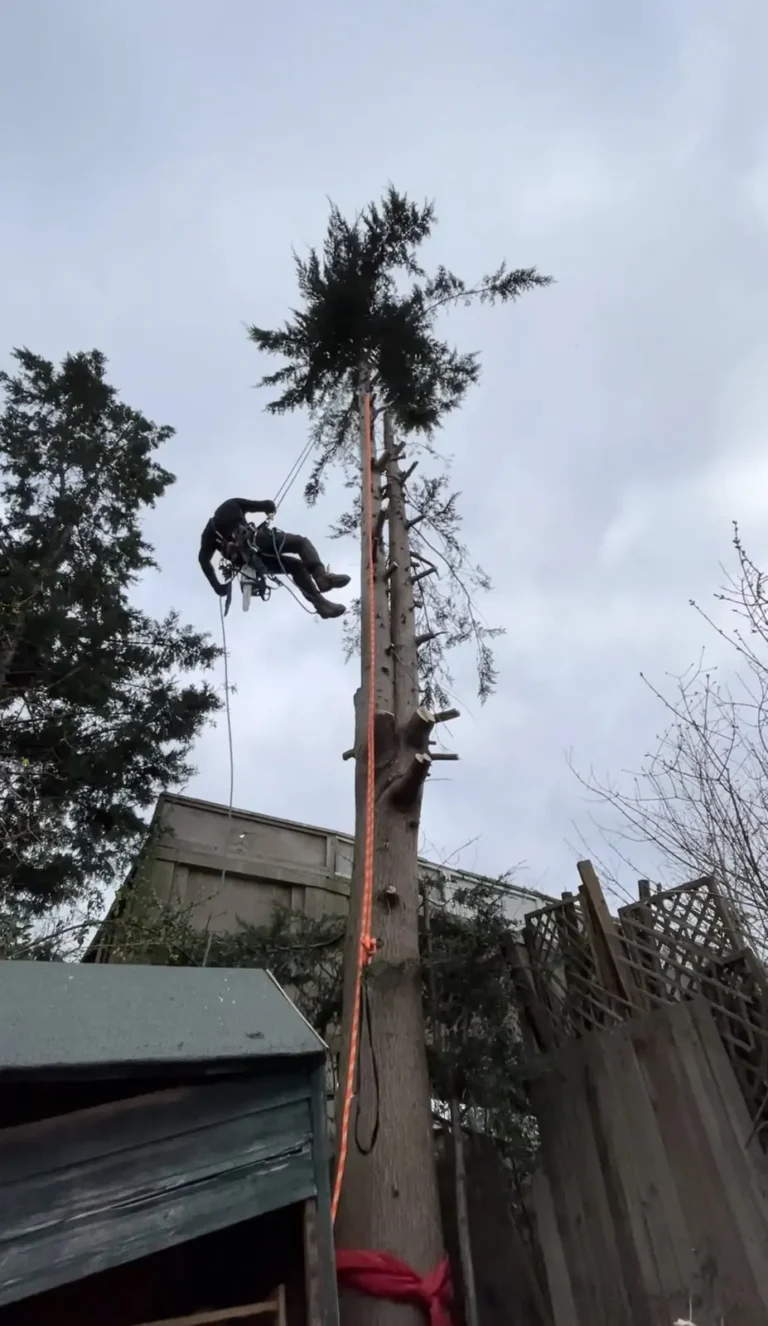
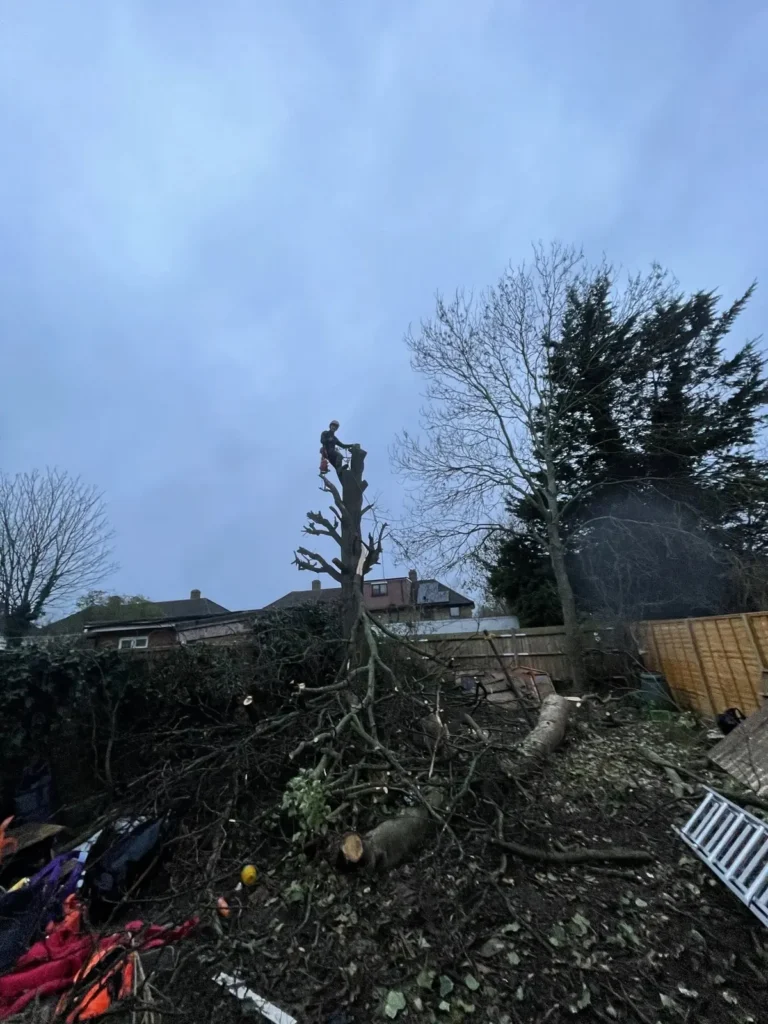
Tree Removal
Safe felling and sectional dismantling of dead, dangerous or unwanted trees, with full clear-up.
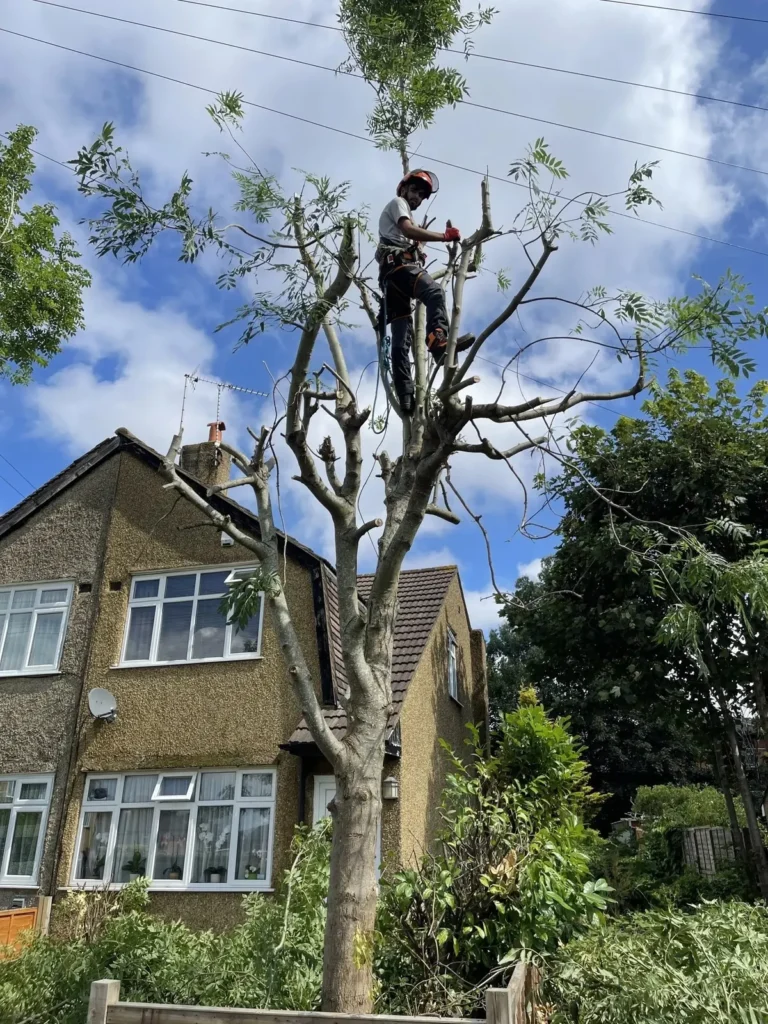
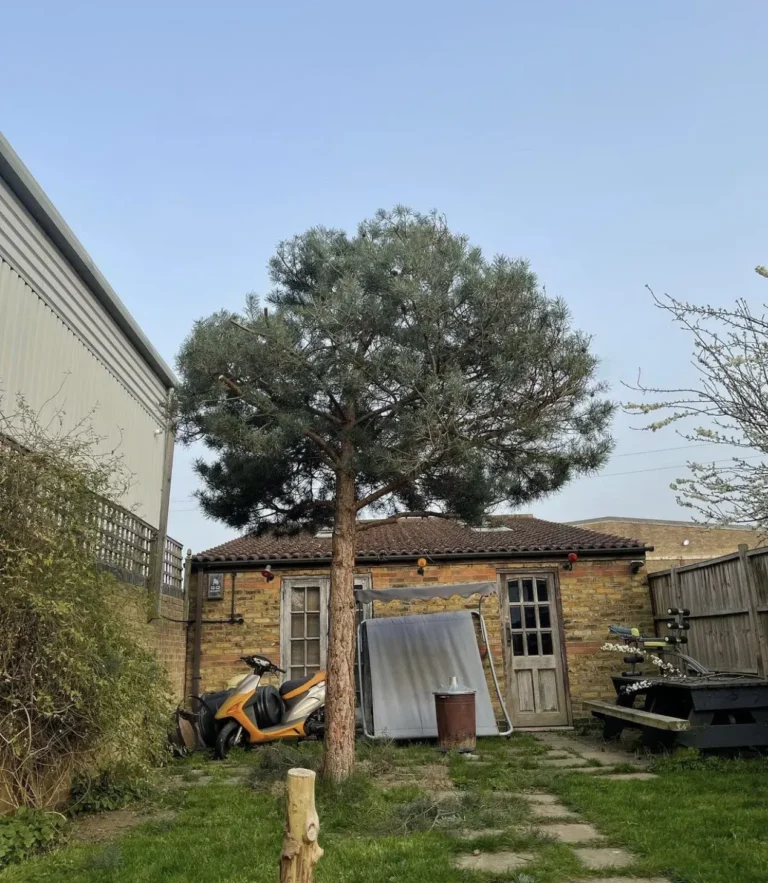
Crown Lifting
Remove lower branches to bring light into the garden and give clearance over drives and paths.
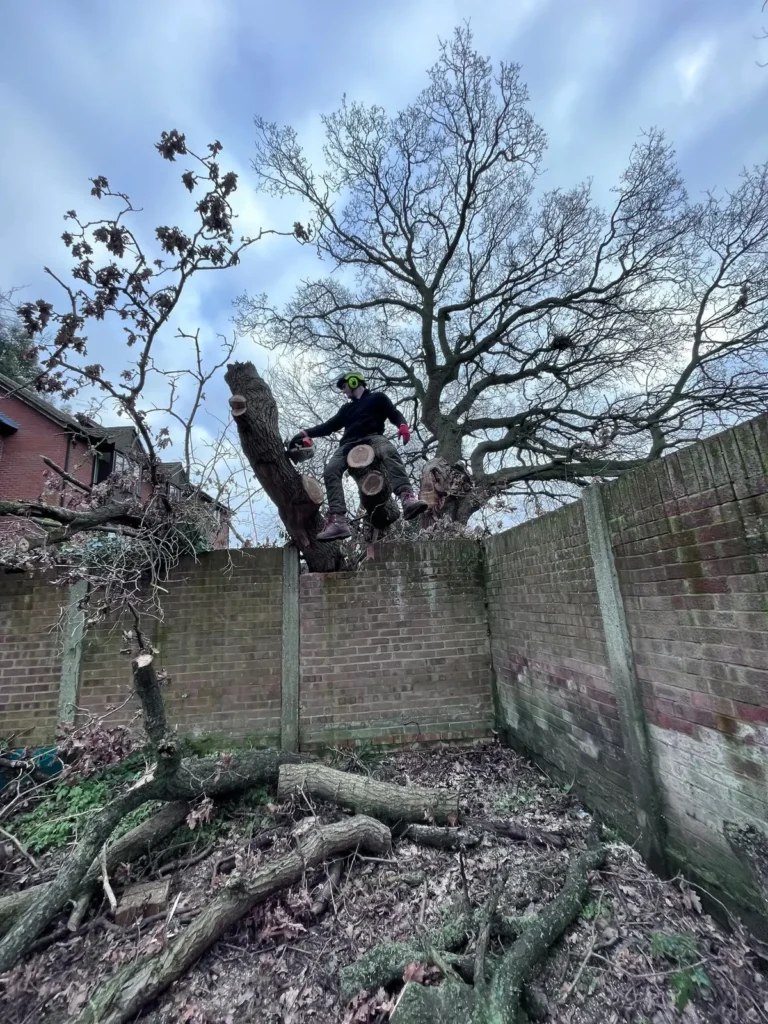
Emergency Tree Work
Making fallen, split and storm-damaged trees safe, then clearing everything away.
Get your free, no-obligation quote
Call 07810 540893, send photos on WhatsApp, or tell us about the job online. We cover Hampton, Twickenham and everywhere within 15 miles.